

Green hydrogen is considered a key component for a sustainable energy transition. It is produced by electrolysis of water using renewable energies. This process enables the CO₂-free production of hydrogen, which is considered a versatile, sustainable energy source in various sectors such as the economy, mobility and energy supply.
The increasing global water shortage can lead to distribution conflicts. The situation is exacerbated by the energy and chemical industries' switch to green hydrogen, the production of which requires large amounts of water. The following options are available as alternative sources of drinking water:
- Seawater
- Surface water (from lakes or rivers)
- Reuse of wastewater from municipal sewage treatment plants
- Reuse of wastewater from industrial sewage treatment plants
With innovative technologies and ongoing research, we help you to generate water for the electrolysis process in a resource-efficient manner with customised plant solutions.
What is green hydrogen?
When water is split into hydrogen and oxygen by electrolysis (in a so-called electrolyser), the hydrogen produced is referred to as green hydrogen if renewable energy is used as the power source. This includes, for example, wind power and solar energy (photovoltaics). The major advantage of green hydrogen is that water is used as the starting product rather than fossil fuels, meaning that production can be completely climate-neutral.
How is green hydrogen currently being used?
- Chemical industry: Green hydrogen serves as a raw material for the production of ammonia and methanol, which are used in fertilisers and various chemical products.
- Steel production: Used in direct reduction plants to enable steel production without the use of coal. This process significantly reduces CO₂ emissions.
- Power generation: Green hydrogen is used to store surplus renewable energy. When needed, it can be converted back into electricity to ensure a stable energy supply.
- Heat supply: In combination with fuel cells, it can contribute to the provision of heat in industrial processes.
- Mobility: Green hydrogen powers fuel cell trucks, buses and cargo ships, especially over long distances where battery electric drives are less practical. Hydrogen-powered trains replace diesel locomotives on non-electrified lines.
What are the advantages of green hydrogen?
- Climate-friendly: Its production does not generate any CO₂ emissions, which helps to reduce the greenhouse effect.
- Versatility: Green hydrogen can be used as a fuel, in industry, in transport and for energy storage.
- Independence: The use of domestic renewable energies reduces dependence on fossil fuels such as natural gas.
- Innovation: Operators of green plants are pioneers of the energy transition and an ecological, sustainable economy.
How is ultrapure water produced for green hydrogen?
Electrolysers require high-purity water – even in large quantities – in order to operate efficiently. The quality of the water has a direct impact on the longevity and performance of the electrolyser. The high-purity water required for the production of green hydrogen can be obtained from various sources: seawater, river water, surface water or wastewater.
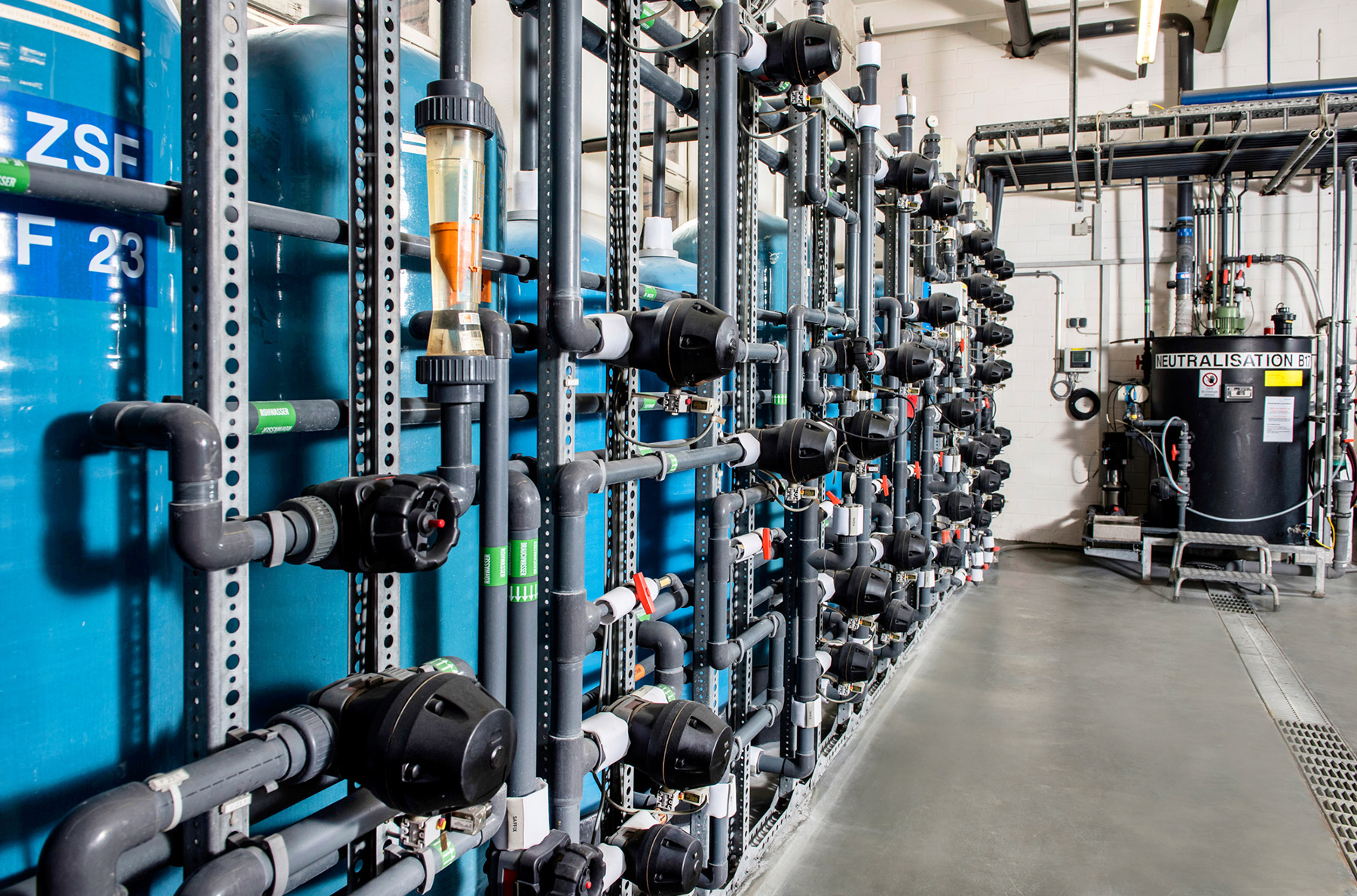
EnviroChemie develops customised plant solutions for water treatment depending on the available water source. Various technologies and combinations thereof are used to reliably produce high water quality:
- Envochem® chemical-physical pre-treatment
- Biomar® membrane biological treatment
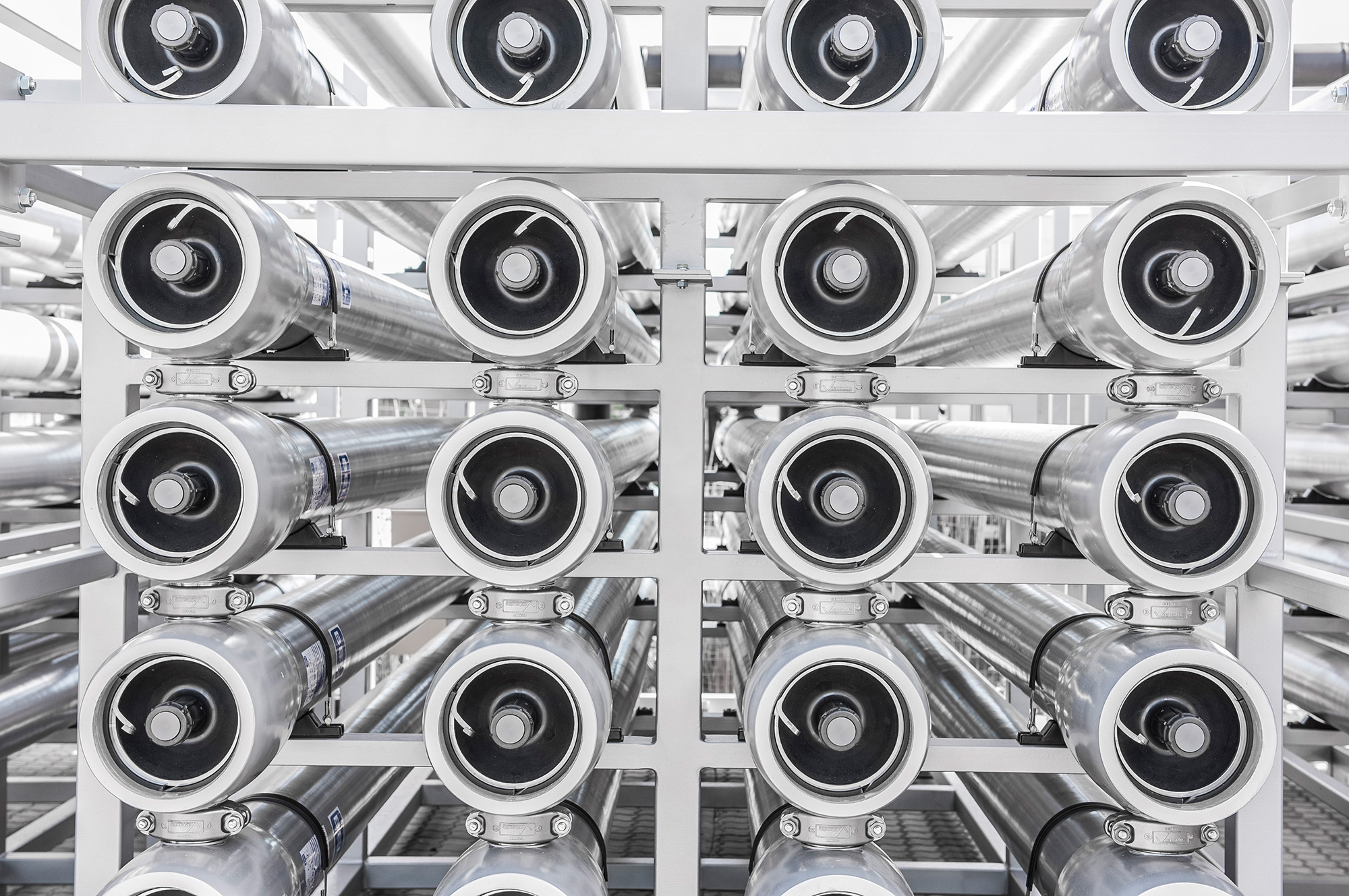
- Envopur® membrane technology, such as ultrafiltration or reverse osmosis, electrodeionisation
- Envochem® multi-stage ion exchange systems
- Single-type regeneration of ion exchange resins